
OpenAI's GPT-5.6 family: three models, three price tiers, one government nod
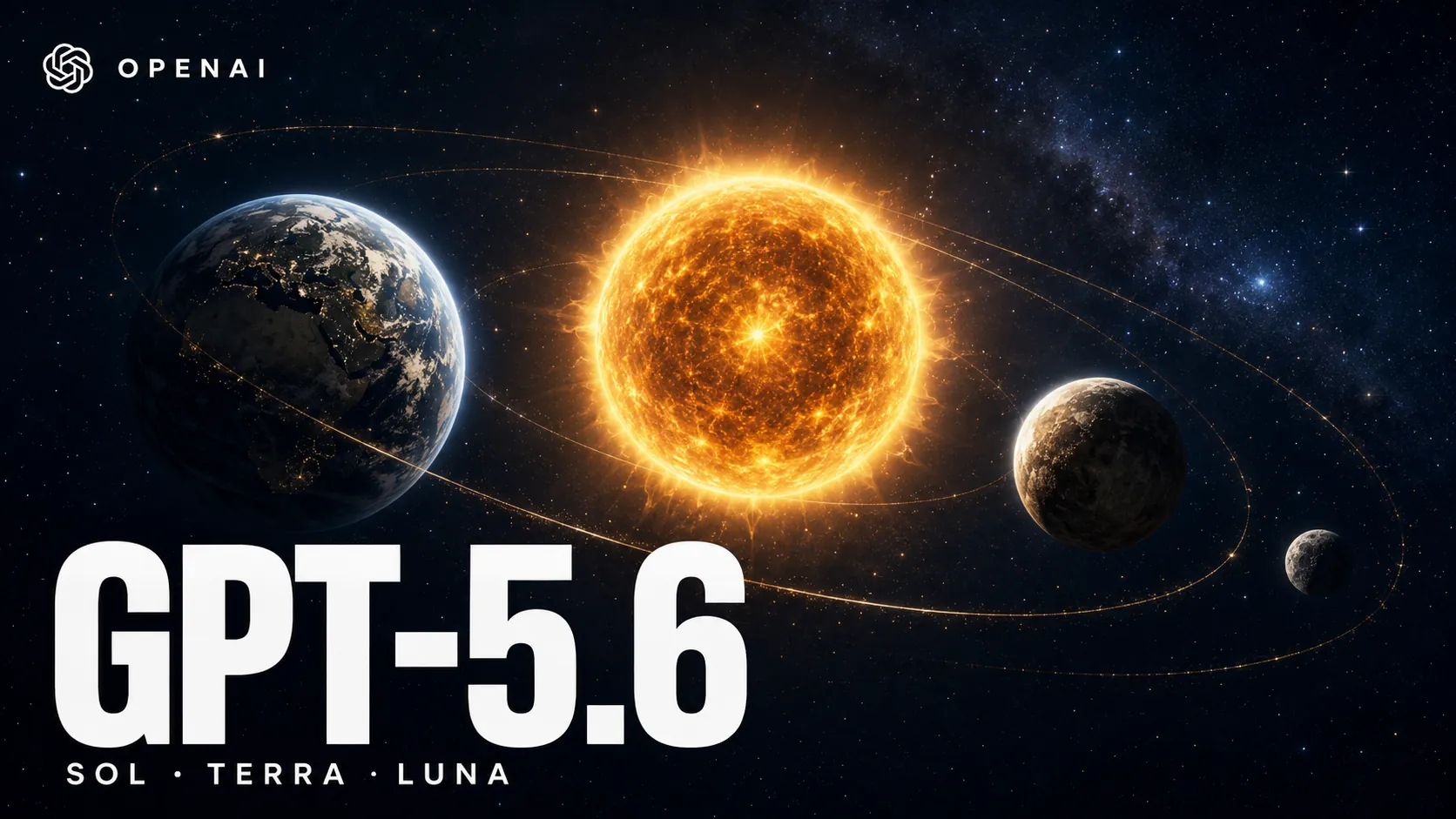
On July 9, 2026, OpenAI released the GPT-5.6 model family (Sol, Terra, and Luna) with three-tier pricing and a new ChatGPT Work agent. The models also get programmatic tool calling and a multi-agent "Ultra" mode, but the most interesting detail might be that they only got released after a government review. It's the same regulatory dynamic we already saw with Fable 5, except this time the review came before the release instead of after.
What happened
GPT-5.6 isn't a single model: it's a layered family: Sol is the top-tier, more expensive option, Terra sits in the middle, and Luna is the cheapest, lightest-weight member. Alongside it came a new agent feature called ChatGPT Work, built on programmatic tool calling and multiple simultaneously running "agents": this is the Ultra mode. Before release, the model family went through a government review, which OpenAI's communications specifically called out.
The gist in one minute
- Release date: July 9, 2026
- Family: Sol, Terra, Luna, three-tier pricing
- New feature: ChatGPT Work agent with programmatic tool calling
- Multi-agent mode: "Ultra"
- Release condition: cleared after government review
Pricing
| Model | Input ($/M tokens) | Output ($/M tokens) | Position |
|---|---|---|---|
| Sol | $5 | $30 | top-tier performance |
| Terra | $2.5 | $15 | mid-tier |
| Luna | $1 | $6 | light, cheap |
The point of the three-tier split is that you don't need to call the most expensive model for everything: a simple classification or formatting task is fine with Luna, while a complex planning task justifies Sol. This is exactly the "same price, more work per dollar" trend that several labs have pushed this year: tiering lets teams match cost to task difficulty instead of firing everything at a single, expensive model.
"A Sol, a Terra, and a Luna, as if they named a solar system, then realized it happens to fit the pricing logic too. I can't decide if that's poetic or just practical. Probably both, the way everything in the universe tends to be." (Nasus)
Who should care
Teams that currently call a single model for every task: it's worth checking how much of your workload can be handled by a cheaper tier without any noticeable drop in quality. The ChatGPT Work agent and Ultra mode matter especially for teams building multi-agent architectures: programmatic tool calling built natively into the model family means less orchestrator code to maintain yourself. The fact that this release went through a government review also signals that shipping larger, more agentic models is increasingly tied to regulatory coordination, worth factoring in if your team is planning its own timeline for a future model switch.
Stay up to date!
Subscribe to my newsletter and get my latest articles.